SEMAX ENTRY 01
Semax began with a Moscow search for ways to help the brain.
The few human results come first. Rat, mouse, and cell findings follow with their limits made plain for you.
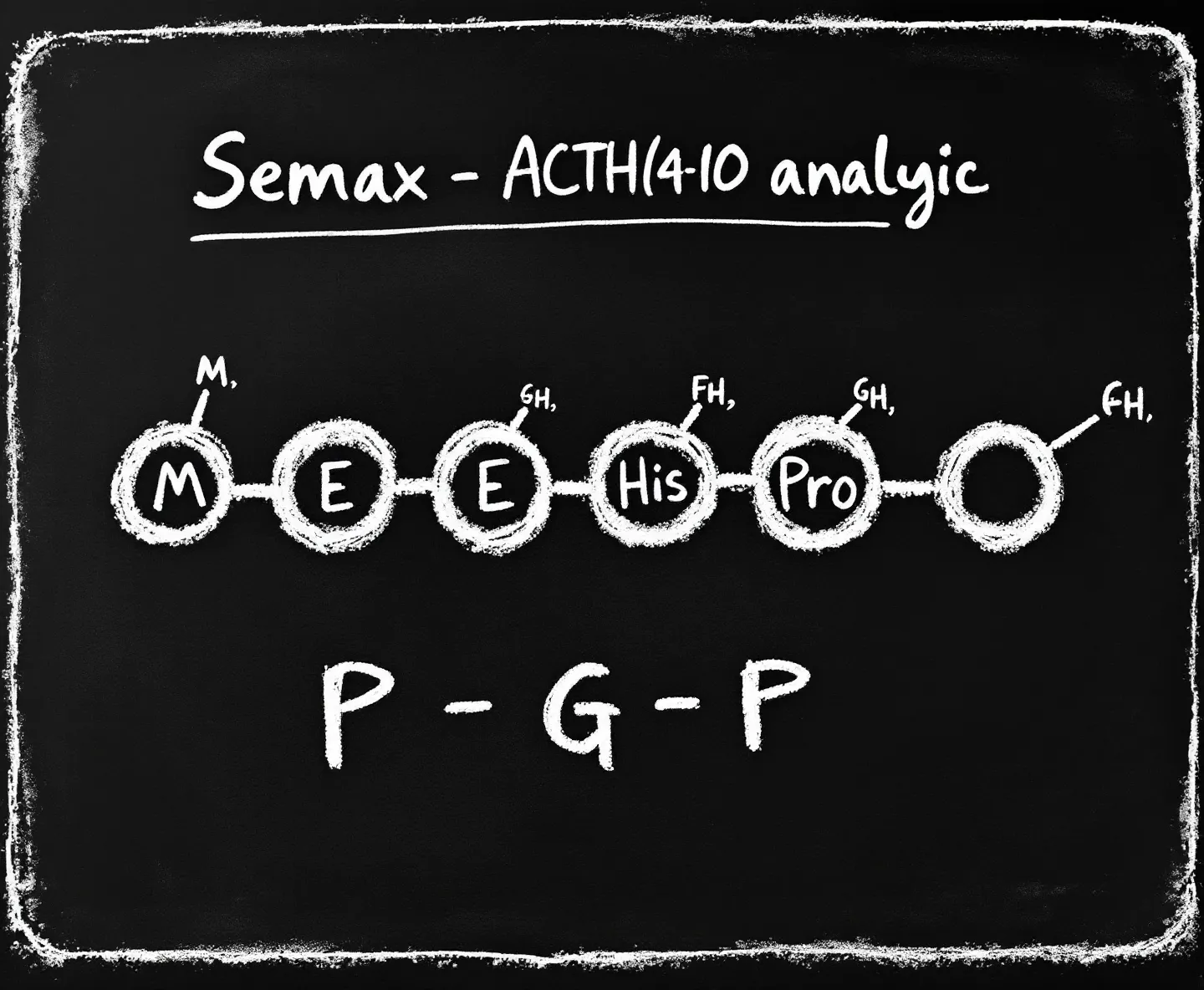
What is Semax, and what did its makers want?
In the 1980s, Moscow scientists made Semax while looking for a drug that might help the brain. Amino acids are small units joined to make proteins. They took four amino acids from a stress hormone, joined three more, and made a peptide—a short chain of seven amino acids that your body would break down [1].
The three added amino acids made Semax harder for enzymes to cut apart. Enzymes help your body break down food, hormones, and drugs. Semax also caused less release of cortisol, which rises as part of the body's stress response [2].
Scientists first described Semax in 1991. Russia added it to its main drug list in 2011 for stroke care, eye nerve disease, and problems with thought. It has no approval from the FDA or any Western drug agency. Later tests mostly examined rats, mice, or cells in dishes, not people like you.
Changed brain chemistry in a rat is still far from proof that Semax will help you.
What did Semax studies find in people and rats?
The strongest human result came from a 1997 stroke study. It compared 30 people given Semax with 80 people given usual care. Those given Semax got movement and other brain skills back faster [7]. One small study at one Russian center can't tell whether Semax would help you.
Rat tests help explain why the work continued. One growth protein that helps brain cells survive and form new links rose near the brain's base [3]. A separate protein that supports injured nerves rose behind the forehead and in the light-sensing part of the eye [4]. That eye finding may matter to nerve damage, but no rat can report clearer sight or thought. Semax also held down a harmful chemical rise when rat brains lacked blood [5]. Another rat test found more use of serotonin and dopamine, chemicals involved in mood and movement [6].
Animal findings can guide the next study. They can't tell you that your body will get the same help.
Does “Semax nootropic” mean it helps memory?
Russian doctors call Semax a nootropic. That means a drug meant to aid attention, memory, or learning without acting like a stimulant [8]. Semax doesn't act like an amphetamine. Rat studies suggest some growth proteins rise hours or days after a dose.
Russian clinics have used Semax nose drops for poor brain blood flow, stroke care, attention problems in children, and eye nerve damage [9]. Those uses don't prove that Semax sharpens thought in a healthy person. No Western trial has compared Semax with a placebo, or sugar pill, for that use.
You can compare the two Russian drugs on Semax vs Selank. The Semax reviews page separates personal reports from results found in studies.
Which Semax evidence can help you judge a claim?
Start by asking who was tested. The research papers show whether a result came from people, rats, mice, or cells. Human results bear more weight for your care.
The Semax dosage page explains why rat amounts can't set a human dose. The Semax mechanism of action page covers changes seen from 2024-2025 and tells you what those changes may mean. It also says when the meaning remains unknown.
This site isn't a clinic and can't advise you. The common Semax questions cover laws, storage, hormones, and gaps in the safety record.